
Pricing strategy · 8 min read
Pricing for platforms and marketplaces: Take rate, fees, subscriptions

Key points
- A take rate, meaning a commission, only works for marketplaces when payment and the sale run through the platform. Otherwise, listing fees, pro subscriptions or paid visibility fit better.
- On marketplaces, the supply side usually pays. Whatever brings supply or first-time users onto the platform stays free.
- Marketplaces should calculate their take rate net of payment and fraud costs and check it by category, because a uniform commission can thin out low-margin categories such as consumer electronics.
- Business customers of platforms mainly want predictable billing and control. Performance-based pricing models are gaining ground on platforms only slowly.
If you run a platform or a marketplace, you have four ways to make money. You take a share of the transaction (take rate), charge fees for listings, sell subscriptions to professional sellers, or charge for add-ons such as visibility. Which model fits depends mainly on two questions: Does the transaction run through your platform, and which side is scarce? Most platforms end up combining two or three of these.
The four models compared
| Model | Fits when | Risk | Example from the podcast |
|---|---|---|---|
| Take rate (commission) | Payment and the sale run through the platform | Users bypass the platform, pressure on low-margin categories | eBay with a percentage final value fee |
| Listing or slot fee | The deal closes elsewhere, the platform delivers reach | Price and the value of each deal drift apart | Job ads with a fixed run time |
| Subscription for pro sellers | Commercial sellers need predictable costs | Idle capacity in weak months, renegotiation in a downturn | Dealer accounts on Kleinanzeigen |
| Visibility and add-ons | Many free users, some want more | Too much advertising degrades search | Featured listings on Kleinanzeigen |
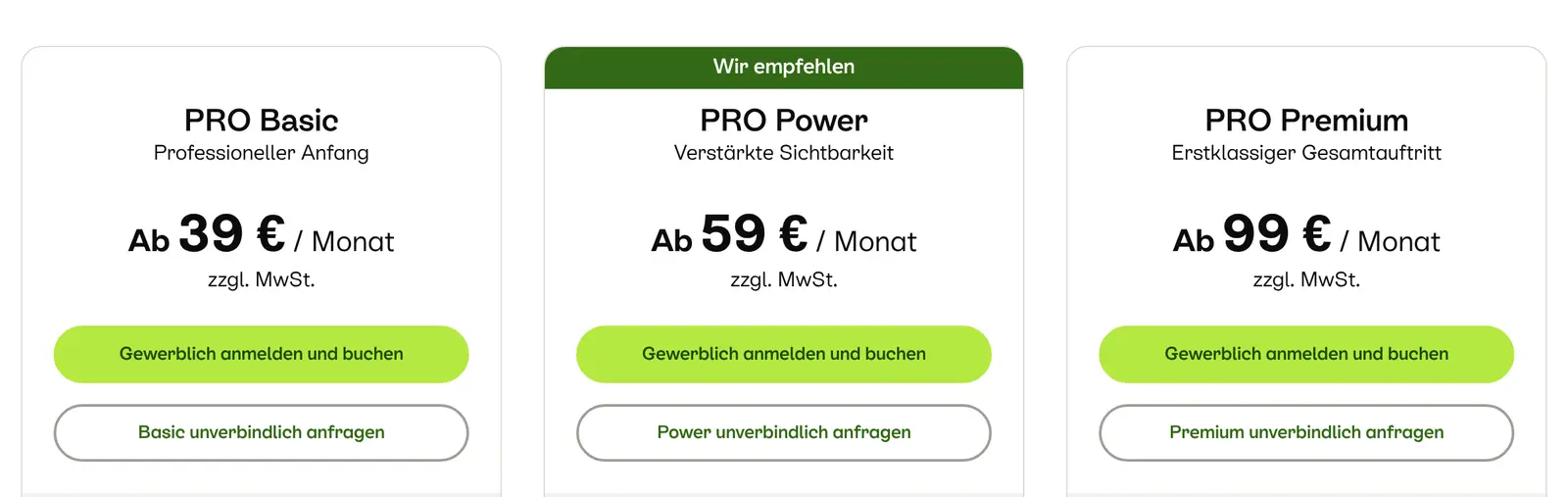
My colleague Anne Ringbeck, who leads our Marketplace Monetization Report, described the difference this way: “Yes, on marketplaces you typically bill much closer to the transaction.” Classifieds sites often don't handle the purchase themselves. That's why listing and slot models still dominate there. True marketplaces usually combine a listing fee with a success-based fee on the sale.
Who pays: supply or demand
As a rule, the supply side pays, because it earns the most from the transaction. Asking both sides to pay at once puts up a barrier on both sides. The economists Jean-Charles Rochet and Jean Tirole described this pattern for two-sided markets. Platforms set a price structure, not just a price level. Often one side is the profit source. The other serves as a loss leader or at most covers its costs. Jasmin Hakenmüller, pricing lead at Kleinanzeigen, put the rule behind it this way: “Whatever is fundamentally important for the flywheel stays free.” And: “So don't put a price on anything that dries up supply or scares off first-time users.”
The exception is markets where people searching compete for scarce supply, such as apartments in big cities. There, people searching pay for a subscription that moves them up the inquiry list. Even within one platform this can differ by market, as at Navan, a business travel platform. Small business customers pay no booking fee there; the money comes from hotel commissions. Deutsche Bahn, the German national railway, pays no commission on business travel. So train bookings need a fee. In the end, it's a blended calculation.
Calculating the take rate correctly
The take rate is the share of transaction volume the platform keeps as revenue. What's left of it depends on the costs you carry per transaction.
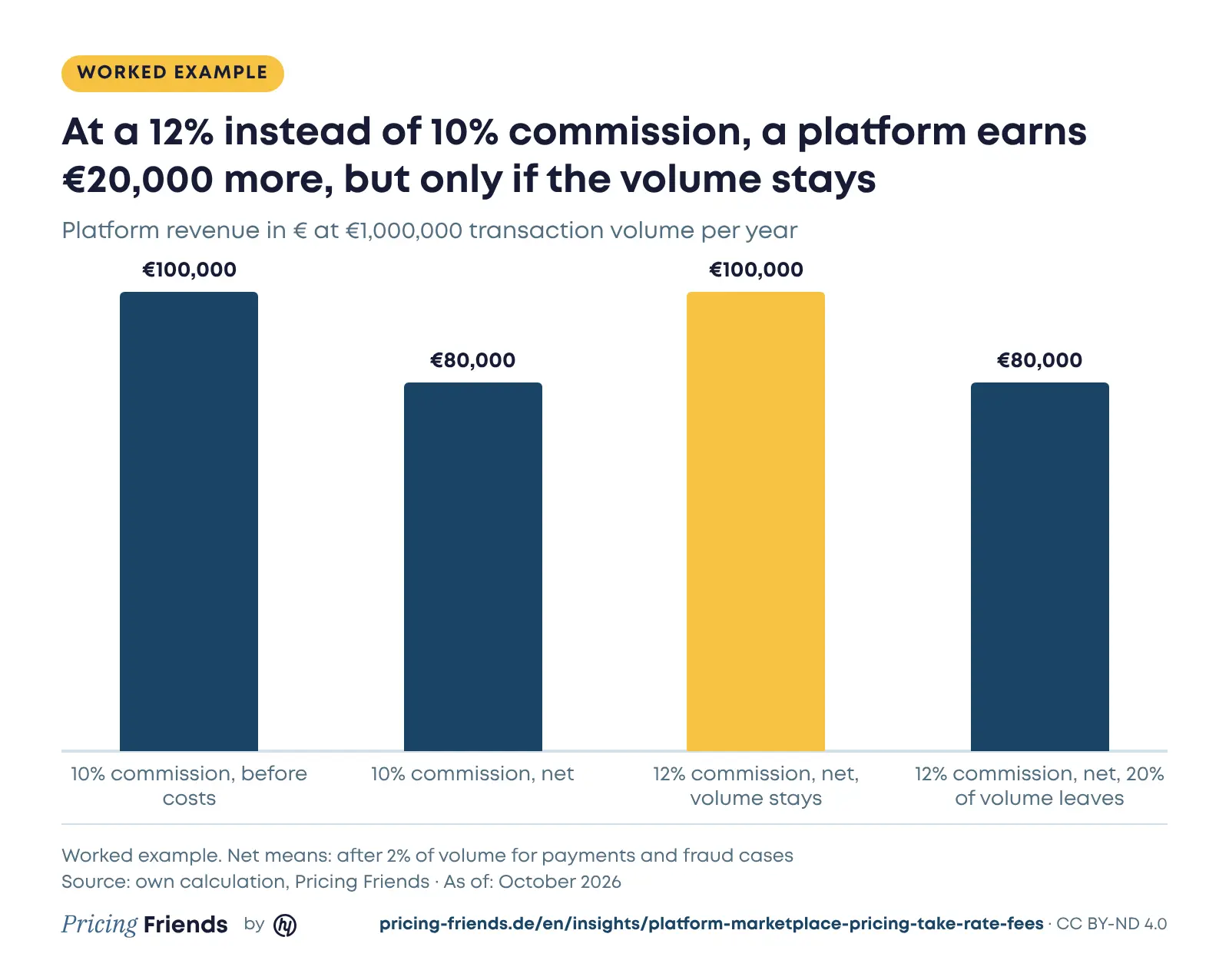
Worked example: €1,000,000 in transaction volume runs through your platform each year, and your commission is 10%. That's €100,000 in revenue. Payment processing costs you 1.5% of volume, or €15,000, and buyer protection and fraud another 0.5%, or €5,000. You keep €80,000 net, a net take rate of 8%. If you raise the commission to 12%, net revenue rises to €100,000, but only if volume holds. If sellers with 20% of the volume leave, you end up at €80,000.
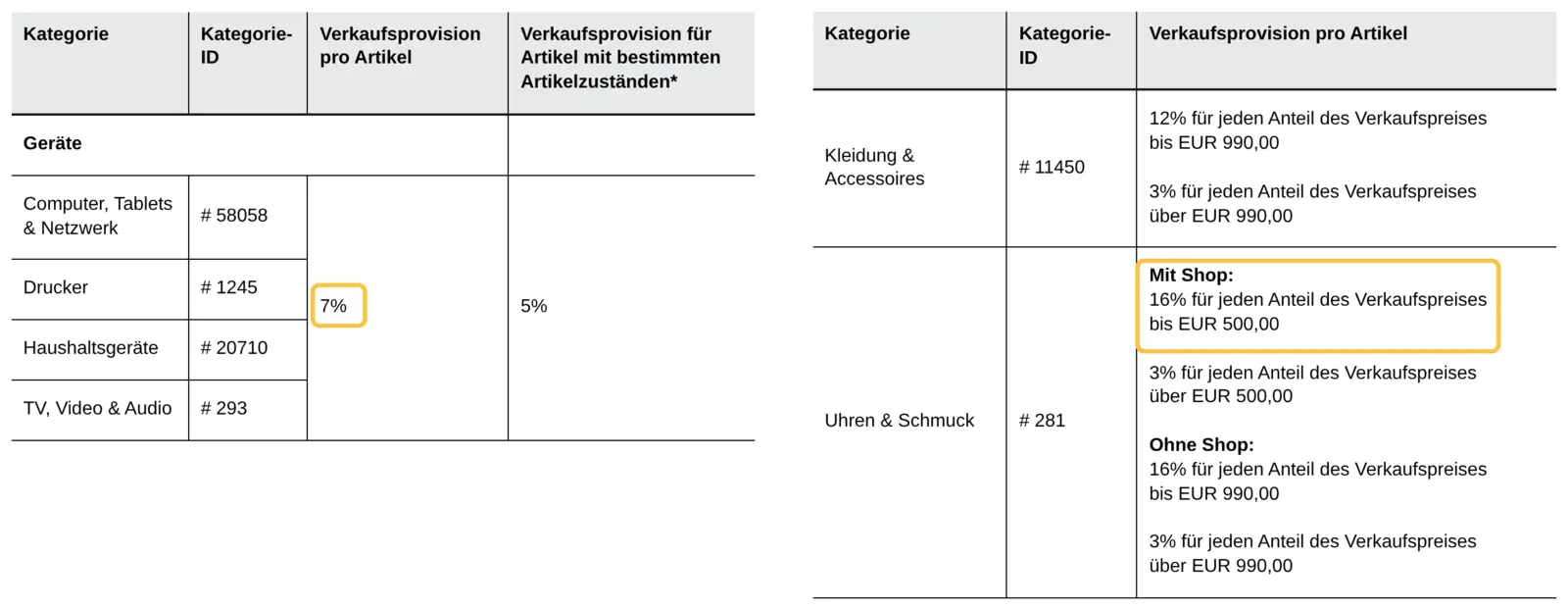
A uniform take rate across all categories is rarely right. Stefan Groß-Selbeck spent seven years at eBay, mostly running the German business. He described how eBay moved from a flat final value fee to fees by category. Consumer electronics was a low-margin business. With the same fee as jewelry, there would have been no reasonable selection there. It worked, but it made the fee structure much more complex.
Fees shape supply
On a marketplace, fees also determine what supply you get. Groß-Selbeck recalled that eBay regularly ran free listing days, even though the fee for a one-euro starting price was only about five cents. Supply exploded every time; his comment: “free is free.” At the same time, listing quality dropped, so those days didn't happen too often.
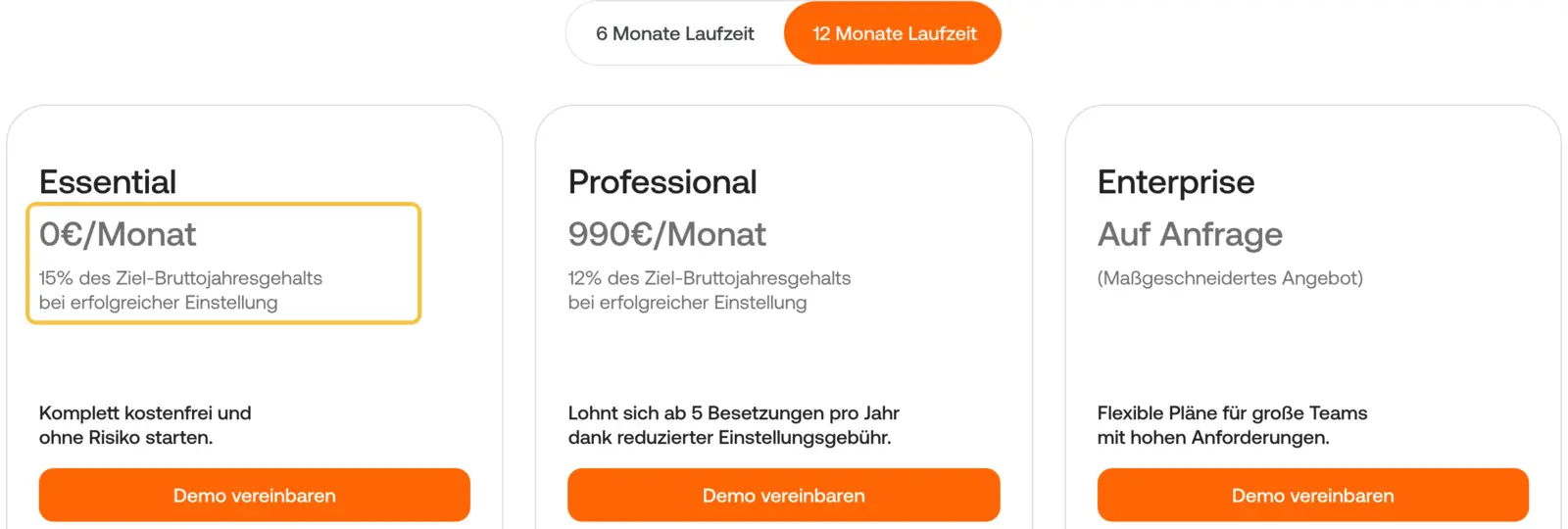
Christoph Zöller described the flip side for his recruiting platform Instaffo. Instaffo tried a pricing model with upfront payment and dropped it again. In October 2025, companies there paid a uniform commission for a successful placement. Zöller describes the goal like this: no upfront barriers, a pure success fee when the contract is signed, and a product consistently optimized for hires.
Predictability beats performance, for now
Performance-based models sound fair, but in B2B they often fail on the customer's budget. Real estate agents and HR departments work with fixed budgets and don't want to pay a different amount every month. Ringbeck: “But what we also see is that many customers, and recruiters too, simply want predictability and control over their billing.” Where platforms switched to performance models, costs exploded for some customers. Some platforms then backtracked.
For our Marketplace Monetization Report 2026, we spoke with 15 executives at European platforms. The first of five findings: Customers still prioritize predictability and simplicity, but hybrid and performance-based models are gaining ground. In 2017, as head of pricing at Axel Springer, I ran a similar study on performance-based pricing. My core hypothesis back then was: “it's coming, but it's coming slowly.” For 2026, I'd sum up Anne's finding in a similar way, with one addition: The trend toward usage-based pricing in AI could give the whole thing new momentum.
For customers with fixed budgets, you can combine a base fee with a variable component. Pure success-based models, by contrast, work only under a few conditions.
Value, not cost: differentiating by listing value
Another finding: Value-based pricing and segmentation increase your share of the customer's budget and the supply on the platform. In practice, this starts with plans and continues with prices by listing value, a form of price differentiation by value. On car platforms, a listing for an €80,000 car costs more than one for a €15,000 car.
AI is changing the metric here. Because people searching send far more inquiries with language models, each inquiry is worth less. Platforms have to curate and show sellers which inquiries are good. If you bill per inquiry, check this before your customers do.
For platforms in the EU, visibility comes with an added obligation. The P2B Regulation (EU) 2019/1150 applies to online intermediation services. If ranking can be influenced for a fee, they must explain this in their terms and conditions and set out how such fees take effect. They must announce every change to the terms to business users on a durable medium at least 15 days before it applies.
What you can do on Monday
- Clarify where the transaction happens. Does payment run through you? Only then does a take rate work.
- Identify the scarce side. The scarce side stays free or cheap; the other side pays.
- Calculate net. Deduct payment, fraud and support costs from the commission.
- Compare categories. Check whether a fee drives away supply in low-margin categories.
- Build a predictability offer. For large customers with fixed budgets: a quota, or a base fee plus a lower success fee.
Bottom line: Price where the value is created
A take rate works when the transaction runs through your platform. Listing fees and subscriptions work when you deliver reach and your customers want to plan. You'll almost always combine both and keep the scarce side free. Check every fee for which supply it attracts and which it drives away.
The free pricing audit on pricing-friends.de checks how your plans and fees come across today in about a minute. It reads your pricing page live and checks pricing model, packaging and price points using the approach hy Consulting Group has developed in more than 600 pricing projects.
Sources
- SaaS & AI Pricing Report 2027 by hy, p. 57
- Pricing Friends, episode 55: Business Travel und Pricing mit Michael Riegel
- Pricing Friends, episode 85: Plattformen und Pricing mit Stefan Groß-Selbeck: Von eBay über Xing bis heute, wie verändert sich Monetarisierung in digitalen Geschäftsmodellen?
- Pricing Friends, episode 96: HRTech und Pricing mit Christoph Zöller: Freemium, Subscription, Performance, was funktioniert?
- Pricing Friends, episode 132: Marktplätze und Pricing mit Anne Ringbeck: Wie verändern KI und verändertes Suchverhalten das klassische „Post and Pray“-Modell?
- Pricing Friends, episode 139: Kleinanzeigen und Pricing mit Jasmin Hakenmüller: Was macht Pricing im Two-Sided Marketplace so einzigartig?
- Marketplace Monetization Report 2026 by hy
- Jean-Charles Rochet and Jean Tirole: Platform Competition in Two-Sided Markets, Journal of the European Economic Association 1 (4), 2003
- Regulation (EU) 2019/1150 on promoting fairness and transparency for business users of online intermediation services, Art. 3 and 5
Quotes are translated from German. The podcast episodes are in German.