
AI search · 8 min read
Show prices or “on request”? B2B software in AI search

Key points
- A B2B software vendor that hides its prices still ends up in the comparison. AI systems then pull the price from other sources.
- The shortlist for B2B software is increasingly built in a chat with AI systems. 92% of B2B buyers end up buying a product from their first list.
- “Price on request” fits B2B software for true enterprise deals. Even then, the pricing page states the price level, the pricing logic and what the enterprise plan includes.
- Software vendors should put prices on the pricing page as readable text and not block AI crawlers. After price changes, update review platforms and old articles.
If you sell B2B software and your pricing page says “on request,” it pays to look at where your buyers start today. We recently planned our family vacation in Italy entirely with Claude for the first time: route, hotels, restaurants, day trips. We said what mattered to us. After that, we mostly booked exactly what it recommended. What we experience as consumers is changing B2B sales too.
If you won't tell me, goodbye
I found out what hidden prices feel like from the buyer's side at a software trade show. I had some time, walked up to exhibitors and asked what a project management tool would cost for our company. I didn't get a single concrete answer. My thought was: “Okay, yeah, if you won't tell me, then goodbye.”
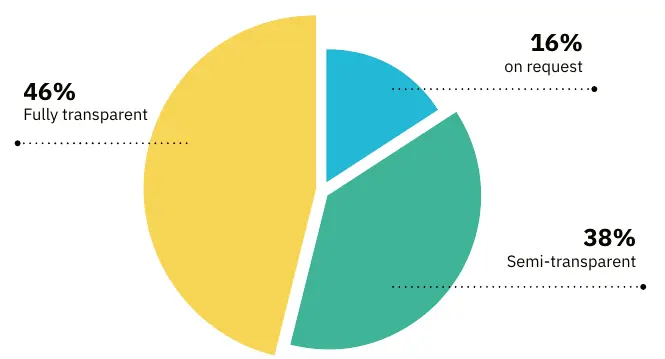
I think most buyers feel the same. And most vendors have shown their prices for a long time. For the SaaS & AI Pricing Report 2026, we analyzed 4,197 software profiles on the German software review platform OMR Reviews. 46% show their prices in full. 38% show them in part, for example only the entry plan or a “from” price. 16% give prices only on request. What stands out to me: Enterprise tiers are almost always hidden. The typical setup is per-user prices for the smaller tiers and enterprise on request next to them.
The shortlist is built in the chat
Google shows thousands of results. AI systems recommend a handful of vendors, and there's no second page. Many software buyers in Germany, Austria and Switzerland now start their research in an AI system. That has consequences: 92% of B2B buyers end up buying a product that was already on their first list, according to a study by Google and Bain. If that list is built in the chat, part of the decision is made there.
Vendors have noticed. In our current survey of 153 SaaS and AI vendors, 41% name AI search as the biggest change in software buying, and 76% are already adapting their marketing because of it. In a study by OMR Reviews and duwerk, 88% of the vendors surveyed name AI visibility as their top priority. One in 25 companies considers itself highly visible, and none has a dedicated budget for it.
Stay silent and you still get priced
If you hide your prices, you stay in the comparison and lose control over the price you're compared on. If you write “Contact Sales,” you hand your price communication to others.
Malte Landwehr, CPO and CMO of Peec AI, explained the mechanism to me in episode 145: “If I don't have information on my pricing website and the LLM wants it, it will take other sources.” Even vendors that show their prices aren't immune. Landwehr ran queries such as “Notion Pricing” or “Linear Pricing” several times and analyzed the sources. Roughly half came from third parties, that is, from sites outside the companies' control.
His own example shows how persistent old numbers are. Peec AI doubled the number of prompts in its smallest plan. Comparison articles and Reddit posts still list the old offer. Peec now gets alerts for such mentions and asks the authors for a correction.
Landwehr expects transparent prices to win when agents prepare purchase decisions and everything else is equal. He qualifies this himself: A vendor with ten times as many good reviews still beats a transparent competitor with three reviews. So transparency helps where offers are similar. For the next 12 months, we expect machine-readable pricing to turn from a marketing decision into a prerequisite for visibility.
When “on request” still fits
In some cases a fixed list price says little: enterprise solutions with individual contracts, projects with their own implementation scope, on-premise licenses with maintenance. So for enterprise, “on request” can make sense. Legally, you have a choice. Under § 1 of the German Price Indication Ordinance (Preisangabenverordnung), the rules apply only to prices shown to consumers. They create no duty to state prices in pure B2B business. In the SMB segment, roughly anything up to 200 seats, clear prices for plans and products should be standard in my view. Felix Rahlmeyer of OMR Reviews added on the podcast that enterprise vendors also have to explain how their price comes about: “But even in enterprise, you do have to explain a bit somehow.”
Between a full price list and silence, there are three levels:
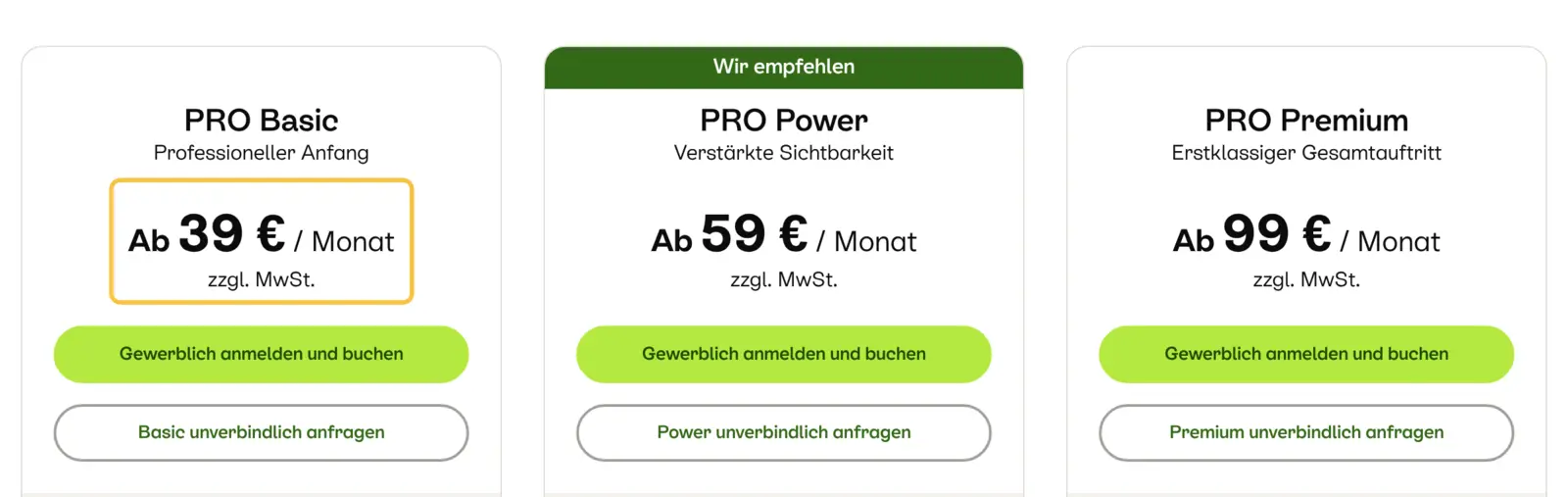
- Starting price. A “from” price such as “from €99 per month,” followed by a conversation with sales. It places you without locking in the deal. Early in the research, the price level above all has to be clear, Landwehr says: solo self-employed, SMB or enterprise. Without any indication, you're at a disadvantage there.
- Pricing logic. Write down what the price depends on: users, usage, modules, locations, implementation. An AI system can quote that, even if the final total is set in conversation.
- Enterprise plan with contents. If the price stays open, describe what's included. We expect enterprise SaaS to publish prices, pricing metrics, entry prices and packaging logic in machine-readable form too.
The entry price deserves special attention. Among 100 profiles we analyzed in detail, 37% of price changes were lower entry prices, often through a new starter plan. AI search adds a risk: If you show only high anchor prices and have no smart entry price, AI quickly rates you as poor value for money. Once you drop out that early, it's hard to get back in.
Landwehr also warns against rebuilding your pricing just for LLMs. Complex pricing models usually have reasons in costs and customer value. What should change most is how you explain the model.
What you can do
- Show the price or a starting price. Where a fixed price isn't possible, show at least a price level and the pricing logic.
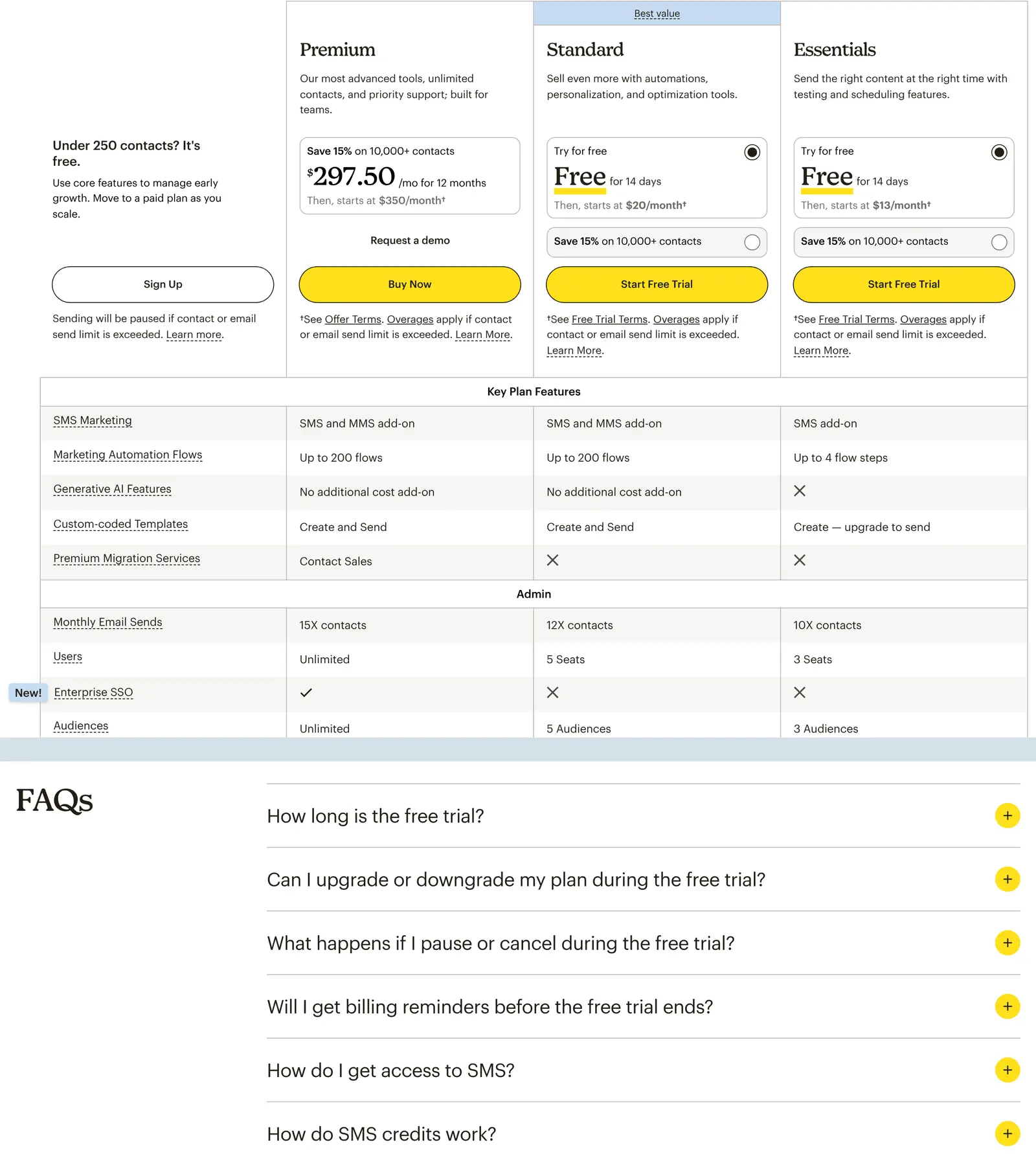
- Put prices in readable text. Prices, plans and contents belong in HTML. Landwehr recommends loading the page once without JavaScript. Prices and plans must still make sense. An FAQ block below the table answers what checkmarks leave open. As a model, he cites Mailchimp's pricing page with a 71-row table, subheadings and an FAQ block. In his queries about email software, it was cited constantly.
- Don't block crawlers. Check whether robots.txt or your CDN's default settings block AI systems' crawlers. OpenAI states in its documentation that pages blocking the OAI-SearchBot crawler don't appear in ChatGPT search answers. At most, they may still show up as a navigation link.
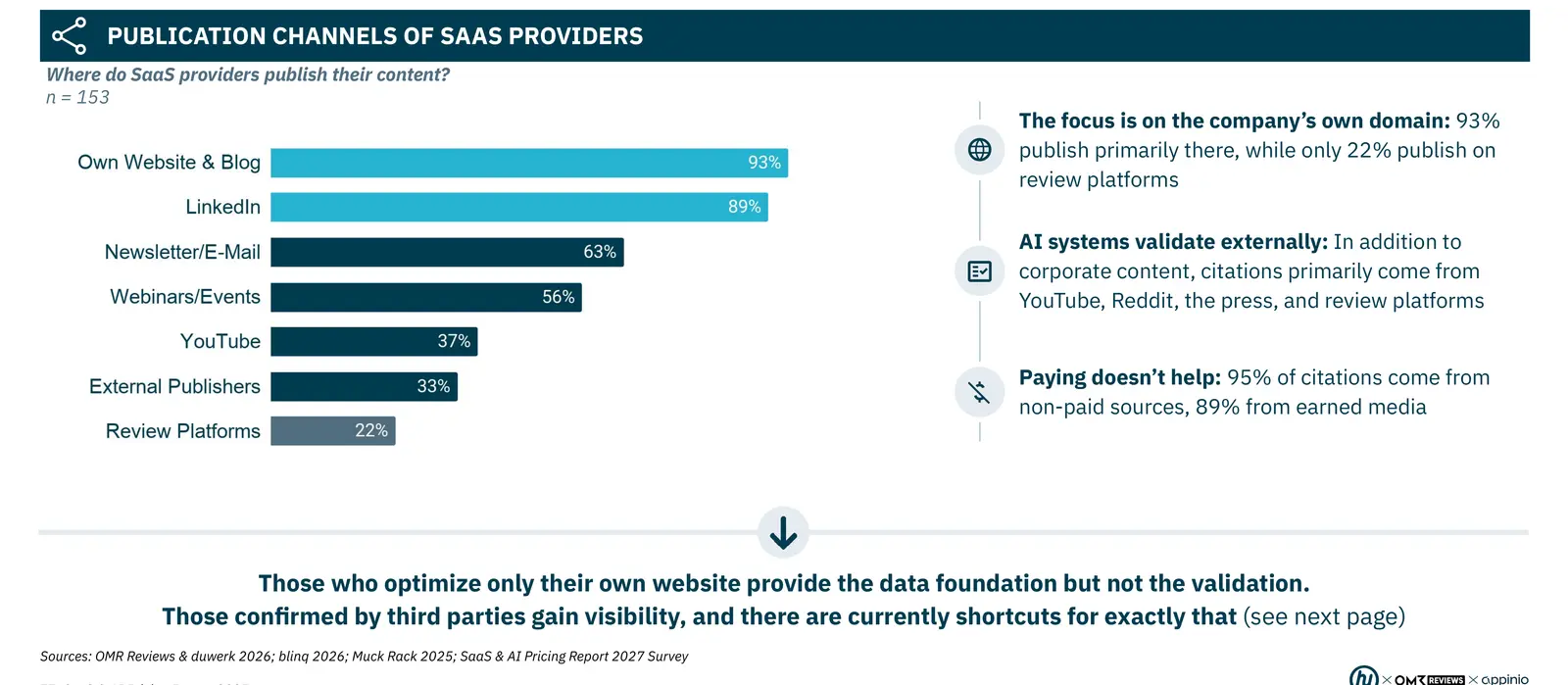
- Same prices everywhere. Review platforms, help center, old blog posts: When you change a price, update everything promptly. 93% of the vendors surveyed publish mainly on their own domain, only 22% on review platforms. Yet AI systems rely heavily on external sources, including review platforms.
- Check for yourself. Ask ChatGPT or Gemini for your price and include your pricing page URL. Then you'll see whether the system pulls the information from your source. The free pricing audit on pricing-friends.de reads your pricing page live, asks ChatGPT, Claude and Gemini the same question and compares the answers with your page. It checks against the method hy Consulting Group developed in more than 600 pricing projects.
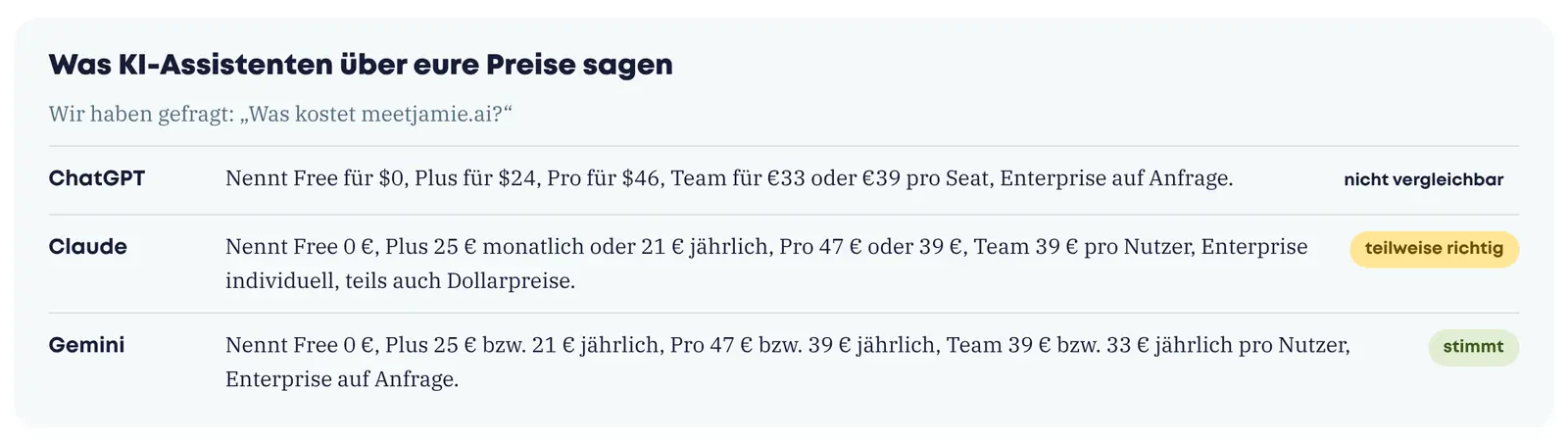
Bottom line: If you don't name your price, others will name it for you
The price question gets answered in the chat whether you take part or not. With a public price, a starting price or a clearly described pricing logic, you supply the source yourself. “On request” remains legitimate for true enterprise deals, but then it needs a price level and an explanation of how the price comes about. On this question, I'm on the side of transparency. All figures on the buying process and AI search are in chapter 7 of the SaaS & AI Pricing Report 2027.
Sources
- SaaS & AI Pricing Report 2027 by hy, pp. 72, 73, 74, 76, 77, 79, 80, 83
- SaaS & AI Pricing Report 2026 by hy, pp. 42, 43
- Preisangabenverordnung (PAngV), § 1 Anwendungsbereich; Grundsatz (German Price Indication Ordinance, scope and principle)
- OpenAI: Overview of OpenAI Crawlers, accessed October 17, 2026
- Pricing Friends, episode 99: Sonderfolge: SaaS-Pricing, AI und die Zukunft der Preismodelle
- Pricing Friends, episode 142: SaaS- und AI-Pricing mit Mariella Knospe und Felix Rahlmeyer: Wie bepreist man Software und AI im Jahr 2027?
- Pricing Friends, episode 145: LLM-Sichtbarkeit und Pricing mit Malte Landwehr: Warum gewinnt transparentes Pricing in der KI-Suche?
Quotes are translated from German. The podcast episodes are in German.